What AI Can’t Replace in Engineering

Artificial intelligence (AI) is rapidly transforming the world today, including the construction industry. With AI, we can now analyse data and run complex simulations almost instantly. In construction for example, AI supports and optimises the use of BIM and other digital tools for scheduling, cost estimation, and even hazard identification.

Yet amid all this technological acceleration, a common question emerges:

will humans compete with AI in the future?

However, from my perspective as an engineer, the question that we should be asking is:

In the future, what truly differentiates engineers from AI?

I believe one of the key differentiators is engineering judgement. Today, there are many capabilities that AI performs better than humans, such as faster calculations and large-scale data processing. However, AI cannot take responsibility for decisions. AI cannot judge and decide.
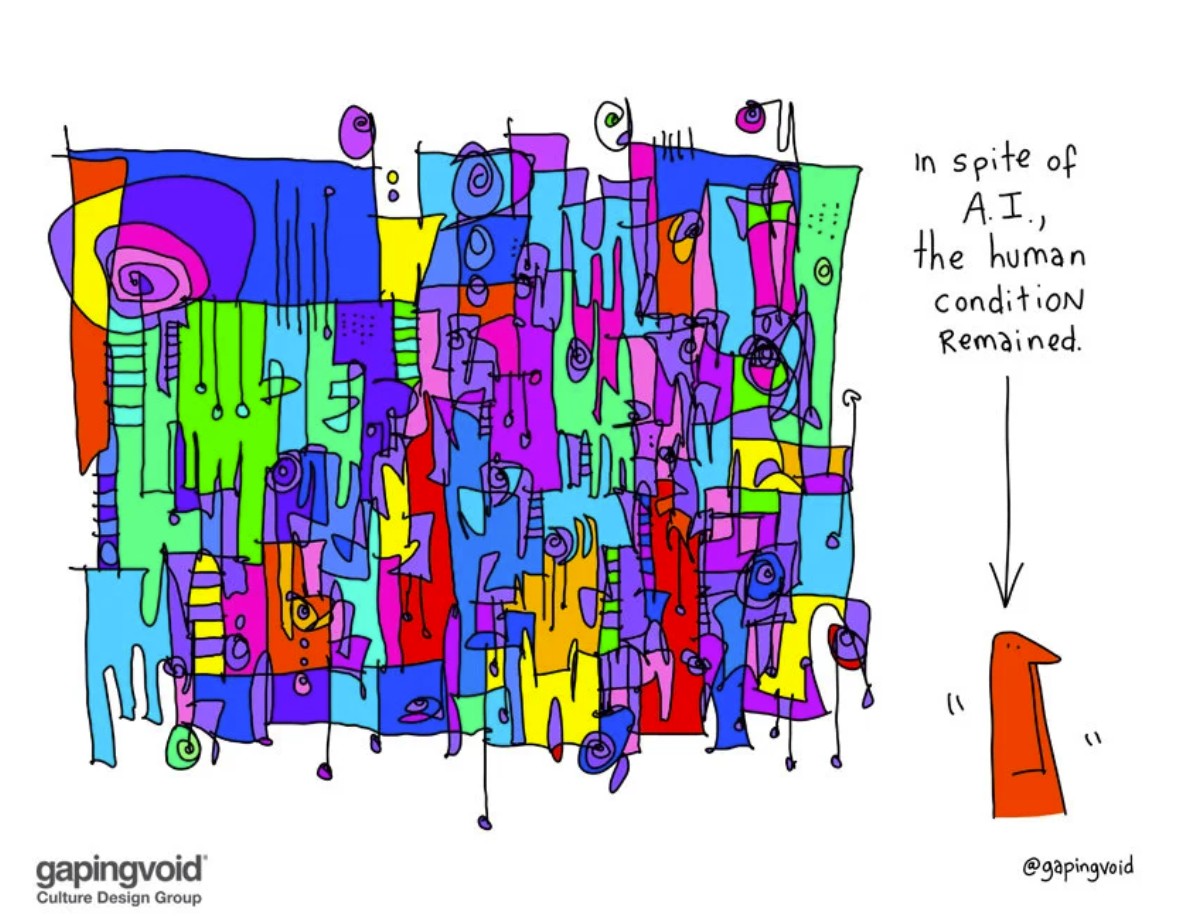
Engineering judgement is the ability to interpret data, understand context, evaluate trade-offs, and make decisions. While in construction context, the judgement need to consider safety, ethics, and long-term consequences as well. At the end, it is humans, not machines (or AI), who are held accountable.

AI can analyse and optimise.
But only humans can judge.

If engineering judgement that differentiates engineers from AI so the next important question that should be raised is:

“how do we develop this judgement?”

From my experience, there are two elements that play a crucial role: formal engineering education, and first-hand project experience

Formal education which through schools or universities provides engineers with foundational theories, frameworks, and problem-solving approaches. This knowledge shapes how engineers think. However, classroom knowledge alone is not enough to develop engineering judgement.

Judgement develops when theory is tested against reality. In construction projects, we usually face tight deadlines, budget constraints, site limitations, and often incomplete information. These exposure to project challenges can gradually strengthen engineering judgement. My interactions with senior engineers and experts clearly demonstrate how deeply their judgement has been shaped by years of experience in the project.

Actually, the importance of understanding fundamental engineering principles became especially clear to me a few years ago while I’m still work a lot with BIM. During a BIM session I delivered at a university, one student asked a question I still remember clearly:

“Is it still important to learn basic structural analysis when we already have BIM?”

My answer was immediate:

“Yes! absolutely.”

In many cases, BIM is merely a tool. Without a solid understanding of engineering fundamentals, it becomes a classic case of garbage in, garbage out. Models and analysis may look impressive but without proper judgement, the outputs can be misleading. Today, In the midst of increasing AI adoption, that question still stay with me, and sometimes I asked myself:

“What should future civil engineering students learn in class? Will they still study fundamental like structural analysis or geotechnical engineering the way we did?”

My answer remains exactly the same as the one I gave years ago:

“Yes, absolutely.”

Because learning engineering fundamentals: understanding frameworks, engineering mechanics, and problem-solving approaches remains essential. AI does not replace engineering thinking. It supports and enhances our ability to analyse and optimise, but it does not decide for us.

Again, engineering judgement stands on two pillars: strong fundamental engineering knowledge and project experience. As AI becomes more embedded in engineering workflows, the real risk is not that engineers will become obsolete, but that they may become over-reliant on AI without sufficient understanding or judgement.

The future does not belong to engineers who merely operate AI. It belongs to engineers who:

  1. Master fundamentals
  2. Understand the project
  3. Exercise engineering judgement through experience

In the end, engineering is not just about computation, calculation, or analysis.
It is about responsibility.
2025 Reflection: A Year of Redefining

At the end of 2024, a rather busy year filled with 8-to-5 (or 8-to-8 again) workdays, short courses, business trips, and conferences, I remember joking with my colleagues that I wouldn’t take on too many side activities in 2025. After all the fun and chaos of 2024, I promised myself that 2025 would be a chill and slow year.

But then 2025 came with an unexpected twist, one that completely redefined my so-called “chill year.” What was meant to be slow quickly turned into another roller coaster ride. Thrilling. But also fun. I took the challenge and chose to enjoy the ride anyway. The rest of 2025 became a path I had never crossed my mind before.

I had to adapt to unfamiliar ground, build new connections, and learn new skills. Rather than leaving my comfort zone, I chose to expand it. It wasn’t always comfortable, but as long as there was something to learn, I embraced it.

Through all the changes, some things remained constant: coffee, reading, and painting. When everything else shifted, these small constants kept me steady, grounding me and quietly reminding me that we are more than our roles.

What I Learned in 2025

1. It’s okay to let go of a plan and enjoy the ride anyway.
My “slow year” turned into a roller coaster almost instantly and I decided to ride it anyway. Chasing the thrill, and yes, the occasional adrenaline rush. I learned that plans are useful, but they shouldn’t be rigid. A bit of flexibility allowed me to stay open, present, and even enjoy paths I never planned to take.

2. We always need to embrace a beginner’s mindset.
Becoming a beginner once again reminded me that there is still so much to learn and that growth often begins with humility. I now try to see myself as a work in progress: a continuous learner, a student of life.

3. Hobbies are anchors when everything shifts.
When routines and expectations changed, coffee, painting, and reading remained constant. They grounded me, gave me space to think, and helped me to keep going.

4. Don’t joke too much with colleagues… the universe might be listening. (kidding)
What I really learned is to be more mindful of the words I throw, even casually. Sometimes jokes have a funny way of turning into reality or at least into unexpected twists.

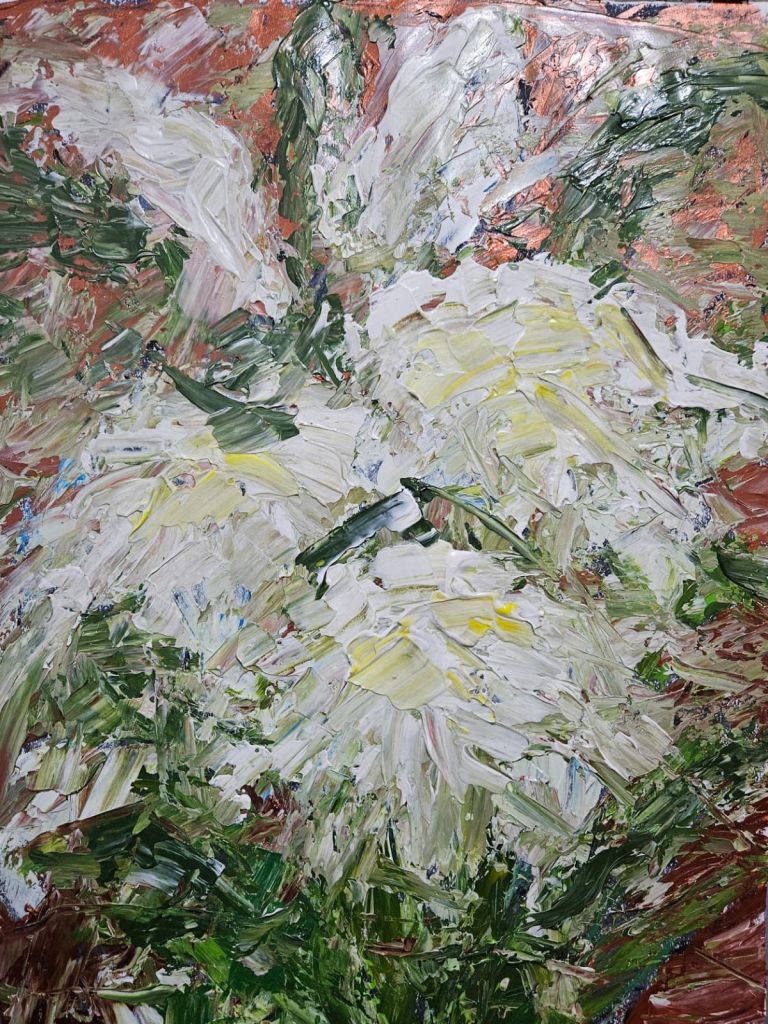
White Lilies (2025), Acrylic on Paper

2025 didn’t unfold the way I planned, but perhaps that was the lesson. Not every year is meant to be predictable and that’s where the fun is.

Some years teach us how to move fast.
Some years teach us how to slow down (or, ironically, move even faster).

For all the rides, thrills, and adrenaline rushes 2025 offered me, I’m deeply grateful. What felt like unfamiliar ground at first slowly became a space for growth. For me, 2025 will always be a year of redefining.

Hola from a beginner, once more.
Let’s ride into 2026 and embrace the unexpected.

What a Cup of Coffee Taught Me About Life

My coffee habit started when I was a teenager. Like most Indonesians, I used to enjoy my coffee sweet. While my mom and dad had their sweet kopi tubruk, I preferred mine with milk. Even through university life, I kept the same habit, savoring both the flavor and the caffeine effect. I think I really chased the caffeine dose back then, since it helped me cram for assignments. Like any typical engineering student, staying up late to finish projects was just part of my daily routine.

However, my coffee habit has also evolved with age. After graduated from the uni, I started enjoying coffee without sugar. Well, an espresso-based, mostly with milk. Most of my friends know I have just one go-to when it comes to espresso-based: a flat white. When I travel or have a day off, I love going coffee hopping, always ordering the classic flat white at different cafés. But after a few cups, it can feel a bit too heavy because of the milk. That’s why lately I prefer manual brews. Unlike espresso-based drinks, with manual brew I enjoy exploring single-origin beans and different brewing techniques

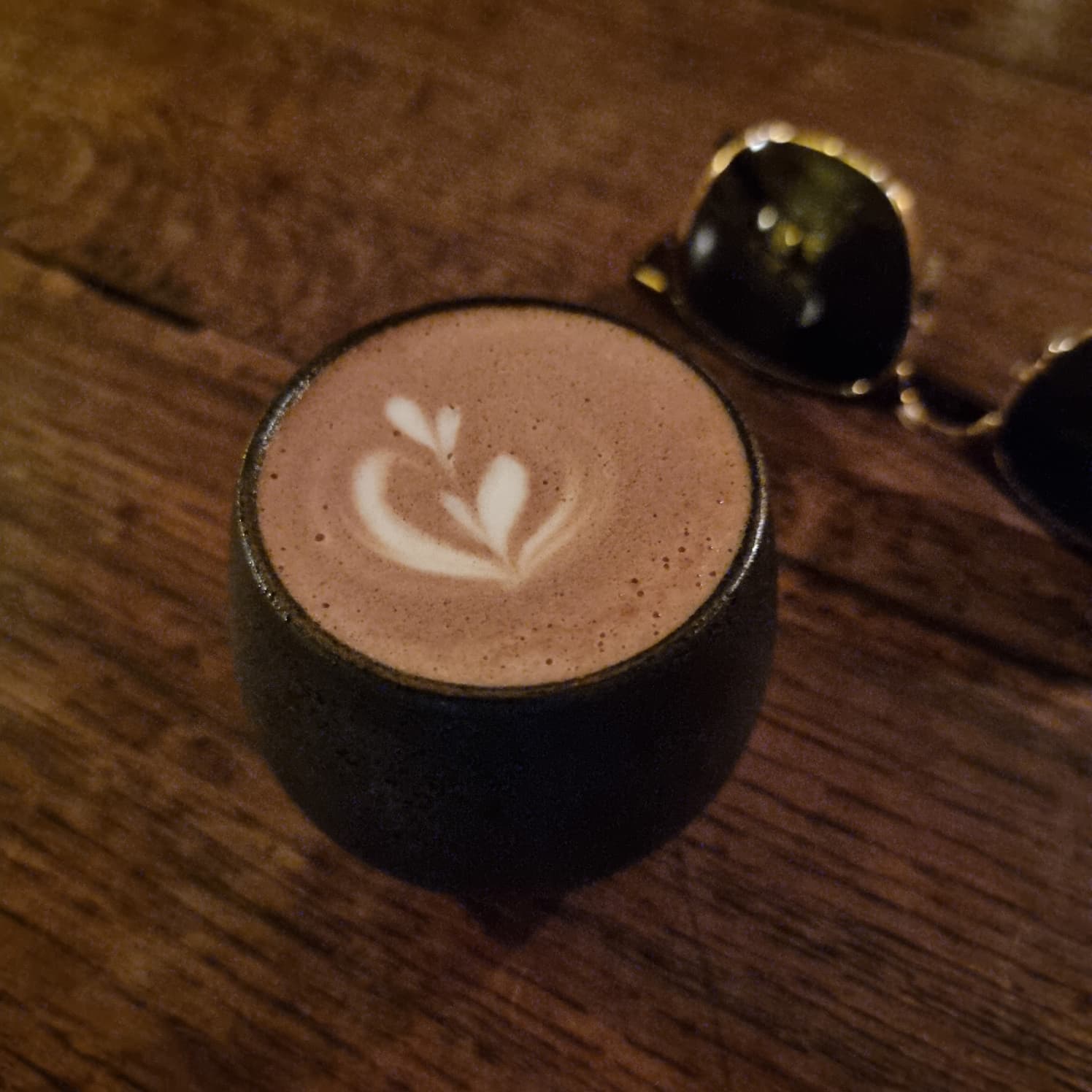
A Cup of Flat White in a Small Coffee Shop in Brighton, UK

I realized there are so many variables that can affect my favorite flat white: the beans, espresso extraction, milk, and the coffee-to-milk ratio. At first, I thought manual brew would be simpler, since it doesn’t involve milk as a variable. But I was completely wrong. Manual brew actually comes with even more variables: the beans, grind size, water (temperature and mineral content), coffee-to-water ratio, technique, and brewing time. What makes it special is the taste is never exactly the same and that’s the charm of it. It’s what keeps me coming back.

For me, coffee is not only about the taste and the caffeine kick, my coffee journey and its evolution have taught me lessons as well

Coffee has taught me to slow down and regain my balance in this fast-paced world. I believe that a good coffee is best enjoyed slowly. It allows me to savor the moment, and reflect. In a world that constantly demands speed and instant results, there’s something grounding about embracing slowness. Working in the construction field, an industry that is demanding and always prone to change, I find that a cup of coffee has become a constant in my life. It’s always be my anchor, a quiet ritual that hold me in the midst of transitions,chaos and uncertainties.

Coffee helps me embrace stillness, creating a calm and clear space for my thoughts. A cup of coffee makes me pause and temporarily disconnect from the noisy world, allowing me to focus only on what’s in front of me. I enjoy every sip of it, the flavor and the aroma. In that stillness, my mind free to wander, and that’s usually when inspiration finds its way in. I’ve spent countless hours in coffee shops, whether working on my dissertation or trying to untangle and organize my thoughts. Even on this blog, most of the writings were born in coffee shops.

Coffee has also taught me to always respect the process, that good things take time. In each coffee house, we often find beans that have traveled from faraway regions, whether local or from abroad. The journey of coffee beans is a long one. From the farmers who nurture them, to the master roasters who carefully discover specific flavors, to the baristas who craft each cup with care. By the time it reaches us, every sip carries the story of many people’s dedication. It reminds me that every part of the process, no matter how small, plays a significant role.

In the end, coffee is more than just a drink for me. It is a reminder to slow down, to embrace stillness, and to respect the process. Every cup carries not only flavor and aroma but also lessons of patience, gratitude, and the dedication behind the journey.

Embracing the Beginner’s Mind

About a week ago, I joined a workshop session where I encountered a part that really really struck me, one single sentence that still lingers in my mind about how we should embrace the beginner’s mind. Exactly on that time, I was in the middle of a change, stepping into a field I had never truly understood before. What I did know was that we should always be lifelong learners, that life is a continuous journey of learning. From a baby learning to crawl, to a teenager trying to find their place in the world, and even when we begin to contemplate our purpose.

Looking back, there were several times I was in a position where I was pushed to learn new skills. Graduated as a civil engineer with a geotechnical engineering focus, I start my career as an engineer where I work with geotechnical works. Only a few months later, I was assigned to another project where I was involved in project management tasks like scheduling and quantity surveying. Not long after, I was assigned to work with BIM, something completely new to me at the time. I learned from scratch, and that was when I discovered my passion for digital construction. I knew this was the future of the construction industry. I even pursued a master’s degree in Digital Engineering Management. After completing my studies in 2022, I continued my career in that field and had found my comfort zone. Then suddenly, I was asked to change fields once again. Like most of sudden changes, the transition brought discomfort, but it also reminded me that we must embrace it.

Back to the concept of the beginner’s mind, although I have always believed in continuous learning, I had never heard of this beginner’s mind concept before. But when I heard it in the workshop that day, I knew it was the missing piece to complement my belief in lifelong learning. The concept, introduced by Zen master Shunryu Suzuki. He said, “In the beginner’s mind there are many possibilities, but in the expert’s there are few.”

I think this approach helps us stay humble. It reminds us that it’s okay not to have everything figured out. It encourages us to approach something new with fresh eyes, free from the weight of prior assumptions. It reminds me of how children, like my niece and nephew, are naturally good at this. They get excited about so many things, ask endless questions, and got curious in the simplest moments. That boundless curiosity, constantly asking “why” and “how”, fuels a willingness to learn. With this approach, the joy of learning something new helps us trust the process without heavy expectations and without fear of the result.

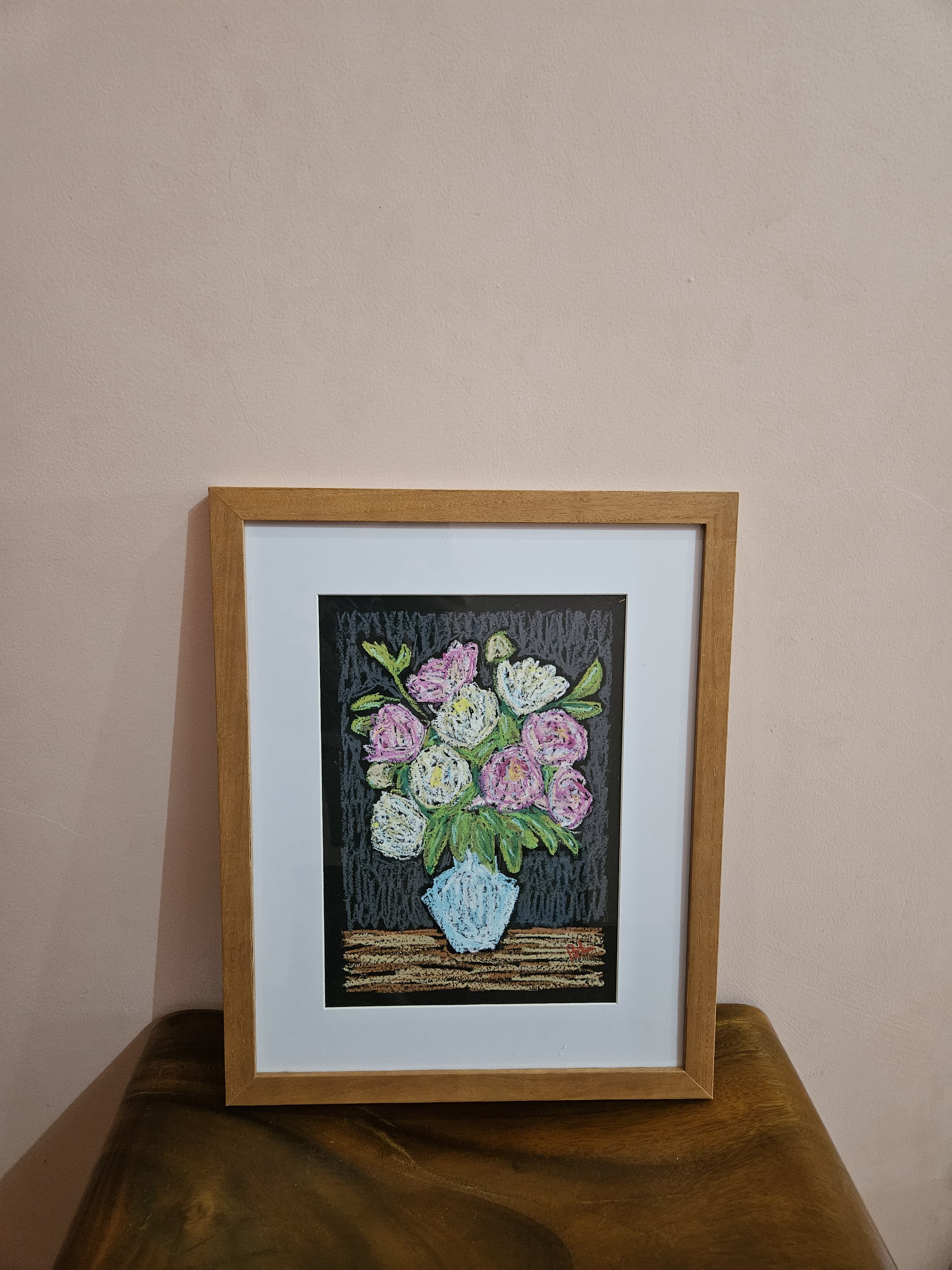
A Vase of Peonies (2025), Pastel on Paper

Just few months ago, I started painting again with my favorite childhood medium, just as I once did, with pure joy, free from rules, fear of mistakes, or pressure to make something “good.” I just realized now that this was the essence of the beginner’s mind. One thing I will keep in mind is that we should always see ourselves as a work in progress, a continuous learner, a lifelong student of life. So, always approach with beginner’s mind.

Fifteen Years, Five Phases, One Speech That Stayed

If there’s one video I’d recommend everyone to watch, it’s Steve Jobs’ commencement speech at Stanford University in 2005

I’ve watched it at different points in my life: during high school, university, the early days of my career, while pursuing my Master’s degree, and now, again, in the midst of change. Each time, a different part resonates with me.

Seventeen years since it was first posted, I still find myself returning to it, revisiting old memories and reminding myself why I started.

A Thought by the Shore

I first watched it in 2010, back when I was a high school student in Bogor, in my teenage phase, full of dreams, and determined to get into my dream university. One line spoke to me:
“Have the courage to follow your heart and intuition. They somehow already know what you truly want to become.”
That was the moment I decided to pursue a degree in civil engineering, driven by my fascination with buildings and bridges, my love for Lego, and interest in physics.


In 2014, I watched it again during my final year at university in Bandung, struggling to complete my thesis. Another line stayed with me:
“The only way to do great work is to love what you do. If you haven’t found it yet, keep looking. Don’t settle.”
It reminded me to hold onto the joy in what I was doing, even during the most stressful and challenging moments.

Then came 2020. The world was hit by COVID, and I had already spent a few years working in the construction industry. At that time, this part hit me hard:
“Your time is limited, so don’t waste it living someone else’s life.”
It pushed me to chase one of my lifelong dreams, to study abroad and see the world from a different perspective.

In 2022, I was in London, once again a student, this time working on my Master’s dissertation. I watched the speech again.
This time, a different line resonated deeply:
“You can’t connect the dots looking forward; you can only connect them looking backward.”
A simple but powerful reminder to pause and reflect on my journey.

Now in 2025, in the midst of yet another transition, I revisit it once more. It’s still one of the most powerful speeches I’ve ever heard. And this line now speaks to me the most:
“Stay hungry. Stay foolish.”
A reminder to keep learning, embrace change, and hold onto the beginner’s mindset, no matter how far you’ve come.

Maybe one day, in the future, I’ll find myself watching this speech again, during another turning point, another leap of faith, another chapter of growth. It has quietly accompanied me through every phase of my journey so far, like an old friend offering timeless wisdom, reminding me to trust the process, to stay curious, and to keep moving forward.

However, above all those lines, these verses from the Qur’an remain the most grounding and powerful reminder for me:

“So when you have finished [your duties], then stand up [for worship]. And to your Lord direct [your] longing.”
— Surah Al-Insyirah (94:7–8)

A gentle yet profound message: to stay anchored in faith and keep going.


Conversations at the Round Table: Rediscovering Our Own Heritage

If you’re sitting at a round table, having lunch or dinner with foreign partners, and suddenly the conversation shifts to culture, what would you say about your culture? About Indonesia for example? This happened to me once, I was unexpectedly given the floor to talk about my culture. But instead of thinking about Indonesia’s rich cultures and traditions, my mind went blank for a moment, my mind was wired for topics like digitalization in construction, the development of our new capital city, the projects my company is involved in, and the construction industry in general. I wasn’t prepared to talk about my culture, but I had to say something. So, I briefly mentioned about our diverse cuisine, then how Indonesia had so many island which I don’t really remember the number, and jumped to talk about our precious komodo dragon. I knew I was only scratching the surface.

At that moment, I realized that my understanding of Indonesia and even my own culture was quite shallow. Maybe it’s already ingrained in me, but I couldn’t articulate it well. Since then, I’ve wanted to deepen my knowledge of Indonesian culture so that next time, I can introduce my country to a foreign partner better.

So, next time what should I say when introducing Indonesia culture to my foreign business partners or connection?

First, I’d talk about our cuisine. Indonesia has incredibly diverse dishes, such as rendang, bakso, sate, soto, and gado-gado. We also have a strong street food culture, including my favorites like martabak and gorengan. Spices absolutely play a key role in our food, shaping the bold flavors we are familiar with. We also have our dining tradition, meals are often served family-style, where dishes are shared, and in some regions, eating with our hands is also common.

Beyond cuisine, Indonesia is one of the most culturally diverse countries in the world, with over 17,000 islands and more than 300 ethnic groups. In terms of traditional arts, we have batik and wayang puppetry, both recognized by UNESCO as part of Indonesia’s intangible cultural heritage.

As a coffee lover, I would also talk about Indonesia’s rich coffee culture. Indonesia produces a variety of coffee, from Robusta to Arabica, with each region offering its own unique flavors. Some well-known varieties include Sidikalang from Sumatra, Ijen from Java, Kintamani from Bali, Toraja from Sulawesi, and Bajawa from Nusa Tenggara. A traditional way to enjoy coffee here is kopi tubruk, a simple yet strong Indonesian brewed coffee. Ah maybe next time I’m gonna write about how we enjoy our kopi here in Indo.

At the end, Indonesia is also home to the largest tropical rainforest in Southeast Asia, a habitat for unique wildlife such as orangutans and Komodo dragons. Indonesia offers countless breathtaking destinations, but some must-visit places based on my experience include Surakarta, Yogyakarta, Bali, and Komodo Island.

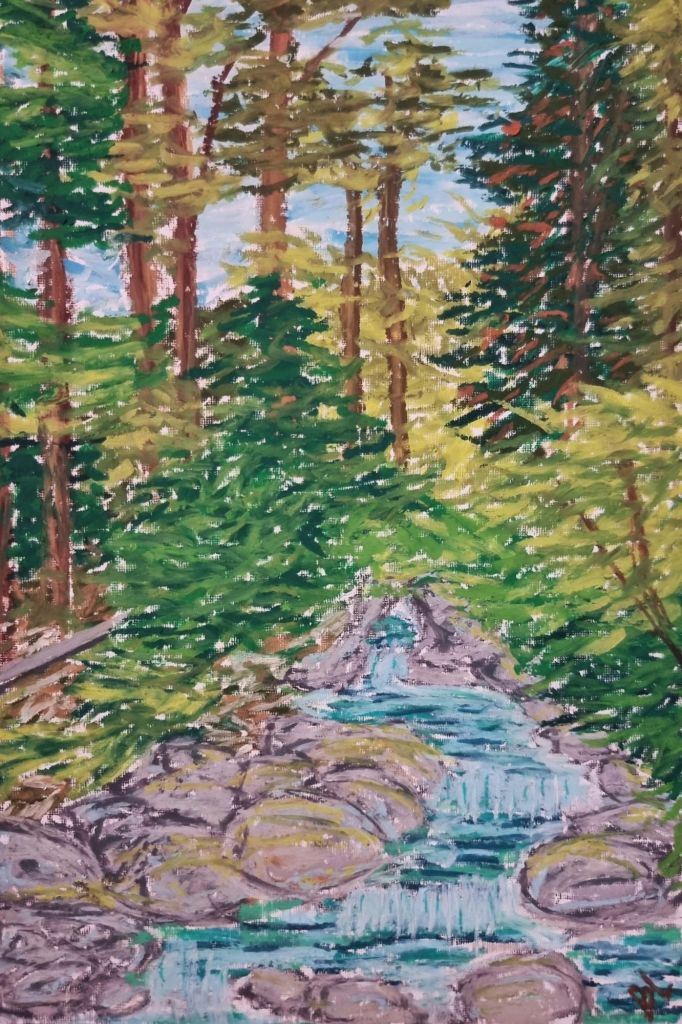
“Forest Stream” 2024. I painted this stream near to Gerojokan Sewu, Surakata

Well that round table experience made me realize how important it is to be able to represent my own culture confidently. Moreover, my late grandfather was an Indonesian literature lecturer, and he had extensive knowledge of Indonesian literature and Javanese culture. I should have had more discussions with my grandpa back then.

2024 Reflection: Learning, Gratitude and Growth

It’s been quite a while since my last post, more than two years, to be exact. Every year, I promise myself to write more, but I haven’t managed to fulfill that promise. Typical me, lol. Hopefully, this year will be different.

For me, new year is always a time for contemplation and reflection. Classic, but it’s also the perfect moment to set resolutions, though I’ll keep those private. Instead, I want to share some reflections from the past year. Since I’ve always treated this blog as a journal, a Daydreamer’s Journal since day one, I hope this post can serve as a reminder for my future self. Up to this point, alhamdulillah, we’ve done well and have much to be grateful for.

2024: A Year of Challenges and Opportunities

2024 was full of lessons; every moment spent, opportunity seized, connection made, and even every mistake offered something to learn. Every experience had something to teach me. One thing I love about being Muslim is how we’re always encouraged to see the good in everything. There is always hikmah behind everything. If something goes well, we express shukr (gratitude). If things don’t go as planned, we reflect, learn, and grow. Nothing is ever truly wasted, every challenge is either a test or a stepping stone.

So, here’s what I learned from last year…

  • Opportunities can come from anywhere, embrace them.
    One Monday morning on my way to work, a friend told me about a short course opportunity in Australia. Although the deadline was only three days away, I managed to complete the application, and I got accepted! Alhamdulillah. That opportunity didn’t just give me new knowledge and perspective; it introduced me to one of the most supportive networks I’ve ever been part of. It’s a reminder that sometimes, the best chances come unexpectedly, and saying yes, even when the odds feel slim, can lead to something amazing.
  • Manage the expectation and always have backup plans .
    Last year, I had the chance to handle one of my company’s event, that outside my usual expertise. I worked with an event organizer, but things didn’t go exactly as planned. While it wasn’t perfect, the attendees were happy, and the event was still a success. That experience taught me an important lesson: when handling something beyond my expertise, it’s crucial to seek help from the right people, but also to manage expectations and have backup plans. No matter how much we prepare, things can still go wrong. It’s impossible to please everyone, so the best approach is to calculate risks, and adapt as needed. Mistakes will happen, but as long as we learn from them, they become valuable stepping stones for doing better next time.
  • Spend more time with those who matter most.
    Family, friends, or anyone I try to make time for them. Alhamdulillah, I got to spend more time with my parents and family last year, even traveling together. Life moves fast, and we never know how much time we have with our loved ones. The same goes for friendships and networks. I’ve made an effort to rekindle old friendships, broaden my network, and stay in touch. Maintaining these relationships matters for me. We never know how a single conversation can bring new perspectives, opportunities, or simply the comfort.
  • Learn more about my culture.
    During a business trip to China, I often had lunch or dinner at a round table, sharing stories about our cultures and customs. That’s when it hit me, I barely knew how to explain my own Indonesian culture. I struggled to find the right words, not because I wasn’t proud of it, but because my understanding was so shallow. It made me realize how important it is to truly know my own roots, not just for myself but also to share them with others. Now, I want to learn more about Indonesia’s rich culture and heritage.
  • Stay active.
    At the start of last year, I was pretty active and managed to work out regularly. But as work got busier, keeping up with my workout routine became a struggle. When my schedule is normal, it’s easy to stay consistent, but during hectic times, it always seems to be the first thing to go. Looking back, I’ve realized that health isn’t something I can put on the back burner. So, I want to make it my priority, be more active, and fix my lifestyle for the long run.
  • Rediscover old hobbies.
    Painting always helps lift my mood, and I’ve realized how important it is to have hobbies that bring you joy. For me, one of those hobbies is painting. I’ve always loved impressionism, artists like Van Gogh, Monet, Seurat, Pissarro, and Sisley have always inspired me. Their use of color and light just speaks to me, and without even realizing it, my style has shifted towards impressionism too. I love how it lets me express myself.
    Last year, I picked up painting again and went back to my childhood favorite medium: pastels. It’s been a great way to unwind and stay connected to my creative side.
  • Give back to the community.
    When the opportunity to give back to the community came up last year through CSR activities, I didn’t hesitate to say yes. My team and I spent a few days at a university in Kalimantan, teaching undergrad students about our field of expertise in the construction industry. It was such a rewarding experience to share our knowledge with the next generation and see their enthusiasm. Giving back like this not only helps others but also reminds me of how much we’ve learned and how we can use that to make a positive impact.

Through these experiences, I’ve come to realize that life is a journey, unfolding in chapters, each with its own lessons and opportunities for growth. 2024 was one of those chapters, filled with moments of learning, gratitude, and personal growth.

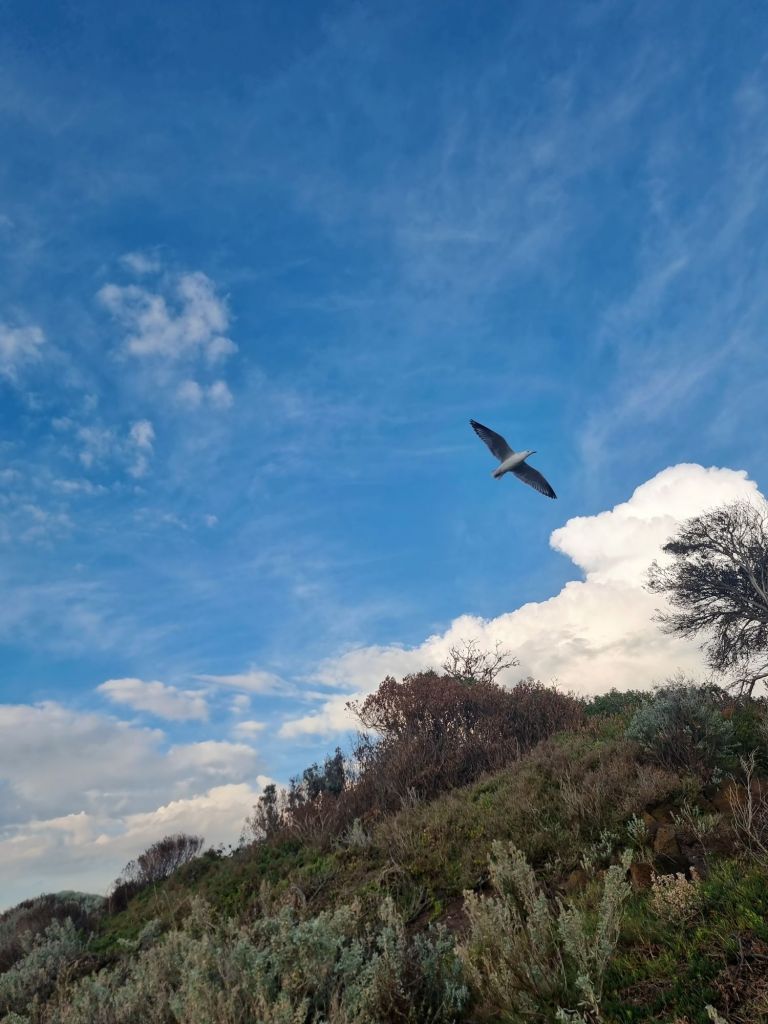
A seagull flying, Brighton Beach Melbourne

Adios 2024. Xièxiè.

Light Update on This Blog

I just sipped flat white while enjoying my Sunday morning in South Jakarta. I just found this local coffee shop few steps away from my place. I chose this instead of my favorite coffee shop in Kemang because I knew it must be so crowded at this time. Last Sunday, it was so packed, I got no table, so I had my coffee to go. I just visit this blog again and I found out that I haven’t write anything since early March. So today, it gonna be a light read.

Actually I had so many ideas that I should write. I found this blog quite random, but consist of things that I care the most: my personal thoughts, construction industry, coffee shops, art galleries and some brief review on books. As I started to write in this blog 9 years ago, it was on my 3rd year of uni, I just want to put my thoughts here at first and had some record of my uni life. But then this blog keep progressing as I entered “the real world”. So I’m gonna continue this blog as it is, as a media of reflection, an outlet to share my passions and things that I care, and documentation on my journey. Hopefully I can write more frequently in the future. Adios

Prelude

Hi There! It’s almost August, a few months left before I’m going back to Indonesia. I really cherish my time here, took a sabbatical leave to continue my study is one of the best decision in my life. Now I’m still working on my dissertation. Wish me luck.

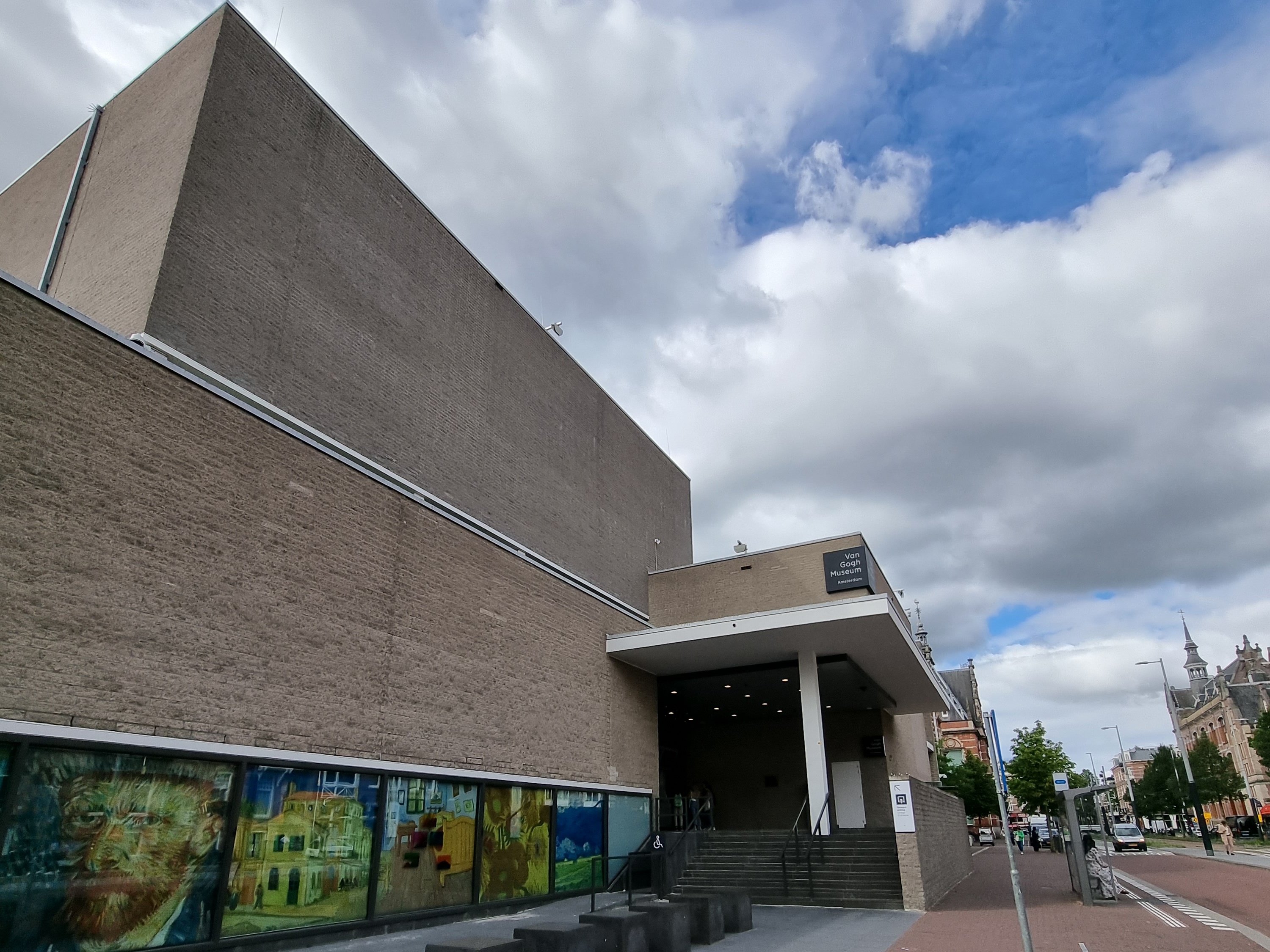
Van Gogh Museum, Amsterdam

I’ll write more frequently after I submit my dissertation. Next I think I’m going to write about my coffee tours. I got several coffee shops recommendation here in London and UK in general. I also visit several amazing cities in Europe last week for coffee tours. Not only about coffee, I’m going to start make a brief review again about book that I read. I read quite lot of books here.

Well, I also think I’m gonna write more about digitalisation in the construction industry. So see you on the next post.

Sekilas Tentang Proses LPDP

Hi, ini sebetulnya draft lama yang belum sempat gue selesaiin dari berbulan-bulan lalu, gue mau menunaikan janji gue untuk nulis tentang beasiswa LPDP. Sorry banget baru sempat nulis nih. Well, jadi alhamdulillah gue menjadi salah satu awardee LPDP per bulan Juli 2021 lalu dan gue mau sedikit share tentang aplikasi beasiswa ini

Jadi secara singkatnya, gue daftar LPDP akhir Mei 2021, terus seleksi beberapa tahap, akhir Juli pengumuman dan September gue berangkat ke London. Untuk pengalaman gue ini prosesnya cepet banget dan persiapannya juga super hectic karena gue juga anak kantoran. Oh iya karena kondisinya masih pandemi semua seleksi dilakukan secara daring. Untuk sedikit backgroud, gue udah cukup lama lulus S1 dan setelah lulus gue langsung kerja di salah satu BUMN konstruksi selama beberapa tahun untuk cari pengalaman.

Well, langsung aja nih. Jadi apa sih yang paling penting buat persiapan beasiswa LPDP? Kalau menurut gue yang paling penting adalah niat. LPDP bukan tujuan akhir kita, tapi alasan kita kenapa mau lanjut sekolah dan nantinya mau ngapain setelah lulus yang paling penting. Kalau tujuan konkretnya udah kepegang insyaAllah semakin mulus lah ngejalanin proses seleksinya. Karena menurut gue terkait essay dan tahapan wawancara berputar disitu2 aja.

LPDP sendiri buka banyak jalur, lebih lengkapnya bisa cek di web LPDP, disitu lengkap banget semua informasinya ada. Kebetulan gue kemarin ambil yang jalur reguler. Nah jadi untuk tahun 2021 ini ada dua skema beasiswa LPDP untuk jalur reguler, yang pertama adalah jalur LOA (Letter of Acceptance) bagi mereka yang udah pegang LOA dari kampusnya dan yang kedua adalah jalur non LOA untuk yang belum punya LOA. Kemarin gue ikut yang jalur LOA karena kebetulan sudah dapet LOA dari UCL. Kalau nggak salah proses seleksinya mirip-mirip sih antara jalur LOA dan Non LOA cuma timelinenya aja yang beda. Oh iya tapi infonya untuk yang tahun 2022 ini jalur LOA bisa skip bagian tes substansi akademik, jadi dari admin langsung ke wawancara. Untuk yang jalur Non LOA kalau nggak salah bisa milih tiga jurusan deh, tapi detailnya bisa diakses di web LPDP lagi.

Nah jadi tahapan pertama adalah seleksi administrasi. Di tahapan ini kita diminta untuk ngelengkapin terkait dokumen administrasi seperti data-data diri, ijazah, transkrip, sertifikat bahasa inggris (IELTS atau TOEFL) dan juga essay tentang komitmen dan rencana pengabdian kita setelah lulus nanti. Di tahap administrasi juga ada beberapa essay terkait personal yang harus kita isi di web LPDPnya, terkait kelebihan, kekurangan, pengalaman berorganisasi dsb. Semua essay-essay ini yang penting kita isinya jujur dan sesuai dengan diri kita. Untuk essay komitmen kontribusi menurut gue lebih bagus kalau dibuat secara spesifik, feasible dan bisa terukur. Oleh karena itu kita harus bener-bener yakin banget nih ketika milih jurusan, kita tau apa yang mau kita pelajarin dan bisa berkontribusi di bidang apa nantinya.

Setelah selesai tahapan administrasi, selanjutnya adalah Tahapan Substansi Akademik dan Kebangsaan. Tes ini mirip-mirip sama TPA buat persiapan ke perguruan tinggi gitu atau tes CPNS (katanya sih, gue belum pernah nyoba CPNS juga soalnya). Jadi bkalau bisa dilatih aja, apalagi kayak gue yang udah lama nggak megang TPA2 gini sejak bertahun-tahun lalu. Di hari yang sama ada tes wawasan kebangsaan juga.

Selanjutnya setelah lolos Tahapan Substansi Akademik dan Kebangsaan, ada wawancara. Karena kondisinya lagi pandemi, kemarin gue full online. Gue diinterview oleh pihak akademisi yang terkait dengan spesialisasi gue dan psikolog, plus ada satu pihak dari LPDP yang memonitor proses interview. Interview sendiri menurut gue merupakan bagian yang paling krusial, karena interviewer bener-bener menguji kesiapan kita untuk melanjutkan studi. Secara garis besar pertanyaannya ngecover apa yang kita tulis di essay, jadi pastikan kita bener-bener jujur dan yakin ketika nulis essay. Pihak akademisi (atau bisa jadi dari profesional) akan menguji kemampuan teknis kita tentunya, jadi pastikan kita paham betul apa bidang yang akan kita dalami nantinya seperti apa. Biasanya mereka juga bakal mengeksplor alasan kita memilih major terkait, pastikan jawaban kita logis. Terkadang pertanyaan juga sering muncul ketika major yang kita pilih tidak inline dengan background studi kita. Well, selama alasannya logis, misal untuk pengembangan karir kedepan, tentu nggak apa-apa. Setelah itu psikolog akan menginterview kita terkait kesiapan studi, jadi pastikan temen-temen udah matang nih perisapannya. Ketika studi di luar misalnya, kita harus memastikan bahwa kita bisa beradaptasi dengan lingkungan dan kultur yang baru misalnya. Kalau dari pihak psikolog sendiri biasanya akan mencoba mengeksplor diri kita jadi sebisanya dijawab dengan apa adanya. Kalau dari gue sih di tahap interview ini kita harus bener-bener bisa menjaga sikap dan mengatur emosi, kalau bisa dibawa santai biar nggak tegang.

Semangat buat temen-temen yang lagi ngejar LPDP, apalagi yang nyiapinnya sambil di tengah kesibukan pekerjaannya. Gue sendiri udah lulus lama banget, tahun 2015 dan dari dulu memang udah ada rencana untuk lanjut sekolah tapi belum tereksekusi karena memilih untuk cari pengalaman dulu. 2021 lalu, di tengah pandemi gue akhirnya memantapkan rencana gue untuk studi dan mencoba LPDP. Untuk temen-temen yang baru lulus juga semangat ya, temen-temen awardee gue banyak kok yang baru lulus juga. Jadi LPDP itu emang terbuka buat siapa aja, tinggal bagaimana kita menyiapkan diri aja.

Gue sendiri juga masih berjuang untuk menyelesaikan studi gue yang cuma 1 tahun di London. Mohon doanya agar bisa lulus dengan hasil yang memuaskan. Sampai jumpa temen-temen, good luck and feel free kalau mau tanya-tanya.