When we think about project management, we often picture schedules, budgets, methodologies, and scope. When we think about communication, we often picture presentations, branding, and media.
A few years ago, I also saw them as two separate disciplines. That perspective changed over the past year as I transitioned my career into Corporate Communication while pursuing my PMP at the same time.
At first, I thought I was stepping away from project management when I moved from Digital Engineering to Corporate Communication. Instead, I discovered that communication is a fundamental part of project management.
Earning my PMP also reinforced my understanding that project management is not only about process, but also about people and business environment. Communication is the thread that connects all three. Because at the end it is about how project stakeholders make good decisions together.
In project delivery, misaligned expectations lead to scope creep. Delayed decisions become schedule delays. Unclear roles and responsibilities create execution issues. Poor stakeholder engagement results in resistance to change and project outcomes. That’s why communication is one of the key drivers of project success.
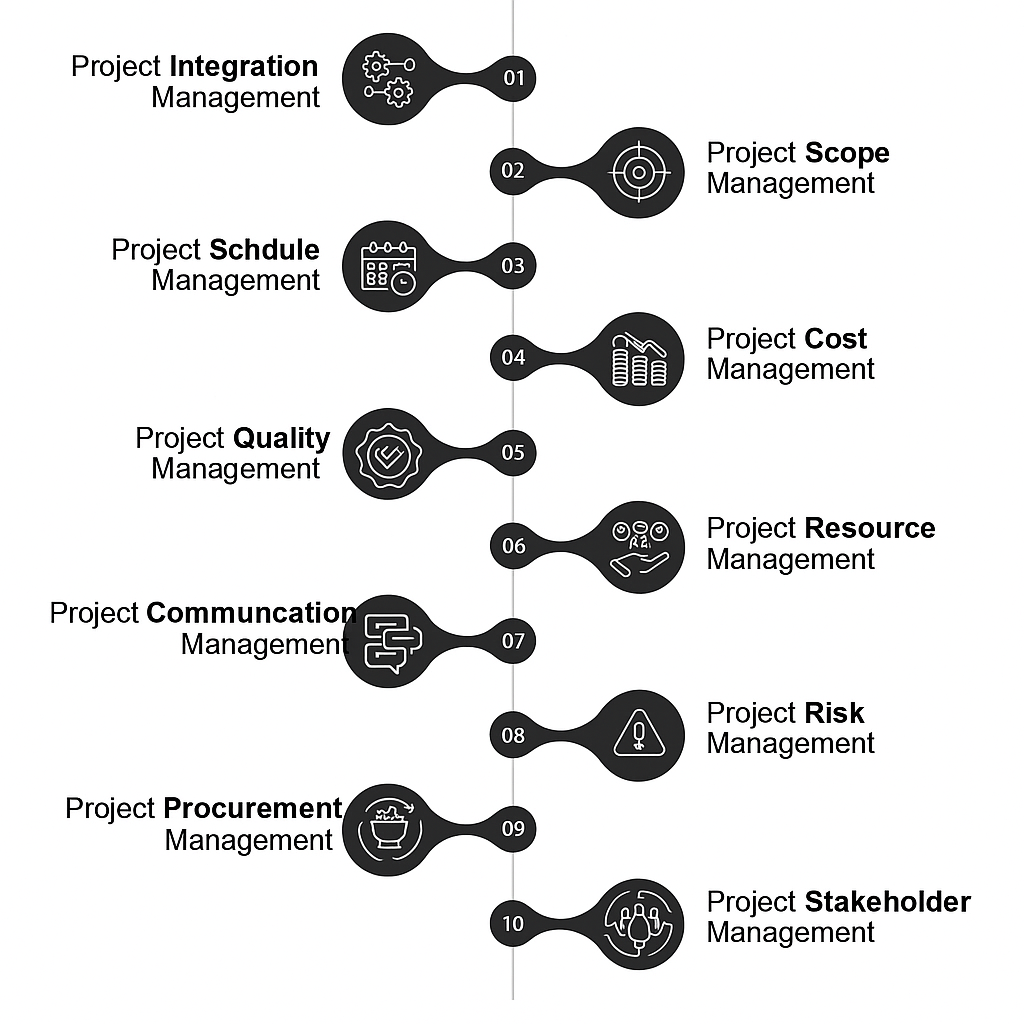
The PMBOK put communication as one of the core knowledge areas in project management, highlighting its importance in planning, executing, and delivering successful projects. Besides my experience and PMBOK, I also read several books that influence my perspective on why every project manager should think like communicator. These books are Thinking Fast and Slow by Daniel Kahneman, Supercommunicators by Charles Duhigg, Never Split the Difference by Chris Voss, and Leaders Eat Last by Simon Sinek. Each of these books got different approaches to see communication.
Facts Alone Rarely Change Minds
As someone who got background in engineering, we often assume that presenting the right data will naturally lead people to the right decision. Thinking Fast and Slow by Daniel Kahneman challenges this assumption. People don’t evaluate information purely rationally. Most of us rely on mental shortcuts, we are influenced by framing, and can interpret same information differently depending on our experiences and expectations. This is also something that I experienced while working in communication.
The example in project management, we usually have different project update report for the team, the client and high level management. Although the facts remain the same, the priorities and concern for each stakeholders are different. That’s why we need to tailor these information for different stakeholders. We tailor the information the way we want them to perceive the information. Because at the end, project managers are not communicating with spreadsheets, they’re communicating with people.
Every Stakeholder Needs a Different Conversation
One of the ideas that resonated most with me from Charles Duhigg’s Supercommunicators is that not every conversation serves the same purpose. Some conversations are practical. Some are emotional. Others are about identity, trust, or belonging. Project managers frequently overlook this distinction.
An engineer may want technical certainty. An executive may want strategic implications. A client may want certainty about their project. A regulator may want compliance. The public may simply want reassurance.
One project. Multiple stakeholders. Multiple conversations. A project manager should really understand about this. Before they convey any information, they have to understand their stakeholder needs first. Because the mistake isn’t giving the wrong answer. It’s answering the right question for the wrong audience.
Every Project Manager is Also a Negotiator
Reading Never Split the Difference by Chris Voss made me realize that project managers negotiate far more often than they realize. Negotiation isn’t limited to contracts, vendors, or subcontractors. We negotiate deadlines, resources, scope, priorities, client expectations, and even internal alignment. Whenever stakeholders have competing priorities, project managers are already negotiating.
Negotiation itself is a part of communication. The best project managers don’t simply persuade people. They listen carefully, understand other interests, and create alignment without forcing agreement. Strong communication creates trust, while effective negotiation helps transform that trust into decisions. Project management involves continuous negotiation throughout project lifecycle.
Of course, project negotiations don’t always end with a perfect win-win solution. Limited budgets, tight schedules, and competing priorities often require compromise instead. A successful negotiation isn’t about everyone getting exactly what they want; it’s about finding a balanced outcome where stakeholders understand the trade-offs and remain committed to the project’s objectives.
Leadership is Built on Trust
Simon Sinek writes in Leaders Eat Last that people perform at their best when they feel safe and trust those around them. In project management, that sense of safety is created largely through communication. The way project managers listen, respond to concerns, share information, and handle difficult conversations determines whether team members feel comfortable speaking up or choose to remain silent.
When communication fosters psychological safety, project teams raise risks earlier instead of hiding them. Trust doesn’t eliminate project problems, but it enables teams to solve them before they become crises.
Hence, communication is more than keeping everyone informed, it’s how project leaders build trust. And as Sinek reminds us, high performing teams are built not only through technical expertise, but through environments where people feel heard, respected, and safe enough to contribute their best work.
***
Looking back, my year in Corporate Communication didn’t take me away from project management, instead it expanded my perspective on it. Engineering taught me how projects are designed and planned. PMP provided the framework for managing and delivering them. Communication showed me how projects actually move forward: through people. The best project managers aren’t simply experts in planning; they create alignment, build trust, influence decisions, and turn complexity into clarity.
At the end, projects succeed not only because of technical excellence or well-defined processes, but because people understand one another, make decisions together, and stay aligned toward a common goal.
Perhaps that’s why every project manager should think like a communicator.