Why Every Project Manager Should Think Like a Communicator

When we think about project management, we often picture schedules, budgets, methodologies, and scope. When we think about communication, we often picture presentations, branding, and media.

A few years ago, I also saw them as two separate disciplines. That perspective changed over the past year as I transitioned my career into Corporate Communication while pursuing my PMP at the same time.

At first, I thought I was stepping away from project management when I moved from Digital Engineering to Corporate Communication. Instead, I discovered that communication is a fundamental part of project management.

Earning my PMP also reinforced my understanding that project management is not only about process, but also about people and business environment. Communication is the thread that connects all three. Because at the end it is about how project stakeholders make good decisions together.

In project delivery, misaligned expectations lead to scope creep. Delayed decisions become schedule delays. Unclear roles and responsibilities create execution issues. Poor stakeholder engagement results in resistance to change and project outcomes. That’s why communication is one of the key drivers of project success.

The PMBOK put communication as one of the core knowledge areas in project management, highlighting its importance in planning, executing, and delivering successful projects. Besides my experience and PMBOK, I also read several books that influence my perspective on why every project manager should think like communicator. These books are Thinking Fast and Slow by Daniel Kahneman, Supercommunicators by Charles Duhigg, Never Split the Difference by Chris Voss, and Leaders Eat Last by Simon Sinek. Each of these books got different approaches to see communication.
Facts Alone Rarely Change Minds

As someone who got background in engineering, we often assume that presenting the right data will naturally lead people to the right decision. Thinking Fast and Slow by Daniel Kahneman challenges this assumption. People don’t evaluate information purely rationally. Most of us rely on mental shortcuts, we are influenced by framing, and can interpret same information differently depending on our experiences and expectations. This is also something that I experienced while working in communication.

The example in project management, we usually have different project update report for the team, the client and high level management. Although the facts remain the same, the priorities and concern for each stakeholders are different. That’s why we need to tailor these information for different stakeholders. We tailor the information the way we want them to perceive the information. Because at the end, project managers are not communicating with spreadsheets, they’re communicating with people.

Every Stakeholder Needs a Different Conversation

One of the ideas that resonated most with me from Charles Duhigg’s Supercommunicators is that not every conversation serves the same purpose. Some conversations are practical. Some are emotional. Others are about identity, trust, or belonging. Project managers frequently overlook this distinction.

An engineer may want technical certainty. An executive may want strategic implications. A client may want certainty about their project. A regulator may want compliance. The public may simply want reassurance.

One project. Multiple stakeholders. Multiple conversations. A project manager should really understand about this. Before they convey any information, they have to understand their stakeholder needs first. Because the mistake isn’t giving the wrong answer. It’s answering the right question for the wrong audience.

Every Project Manager is Also a Negotiator

Reading Never Split the Difference by Chris Voss made me realize that project managers negotiate far more often than they realize. Negotiation isn’t limited to contracts, vendors, or subcontractors. We negotiate deadlines, resources, scope, priorities, client expectations, and even internal alignment. Whenever stakeholders have competing priorities, project managers are already negotiating.

Negotiation itself is a part of communication. The best project managers don’t simply persuade people. They listen carefully, understand other interests, and create alignment without forcing agreement. Strong communication creates trust, while effective negotiation helps transform that trust into decisions. Project management involves continuous negotiation throughout project lifecycle.

Of course, project negotiations don’t always end with a perfect win-win solution. Limited budgets, tight schedules, and competing priorities often require compromise instead. A successful negotiation isn’t about everyone getting exactly what they want; it’s about finding a balanced outcome where stakeholders understand the trade-offs and remain committed to the project’s objectives.

Leadership is Built on Trust

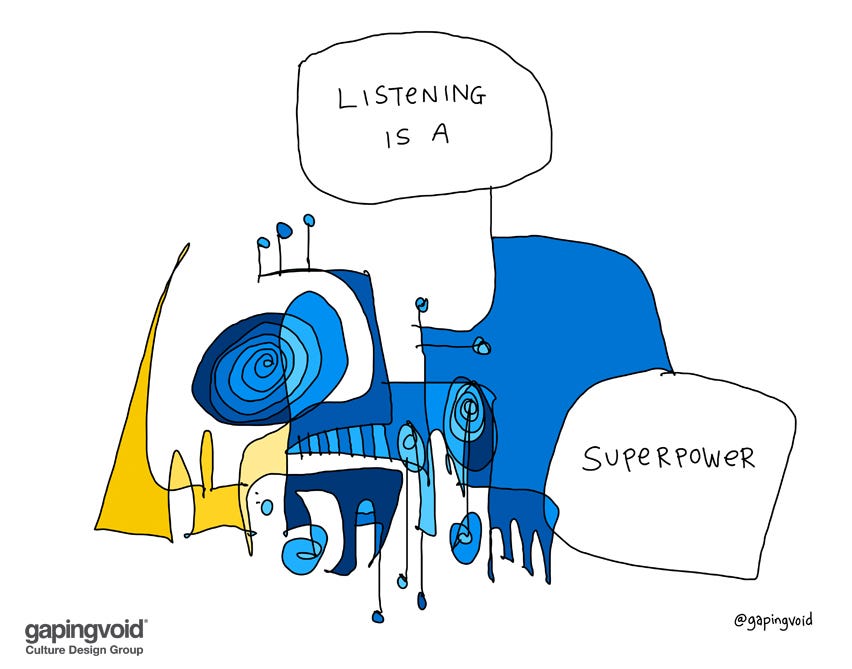
Simon Sinek writes in Leaders Eat Last that people perform at their best when they feel safe and trust those around them. In project management, that sense of safety is created largely through communication. The way project managers listen, respond to concerns, share information, and handle difficult conversations determines whether team members feel comfortable speaking up or choose to remain silent.

When communication fosters psychological safety, project teams raise risks earlier instead of hiding them. Trust doesn’t eliminate project problems, but it enables teams to solve them before they become crises.

Hence, communication is more than keeping everyone informed, it’s how project leaders build trust. And as Sinek reminds us, high performing teams are built not only through technical expertise, but through environments where people feel heard, respected, and safe enough to contribute their best work.

***

Looking back, my year in Corporate Communication didn’t take me away from project management, instead it expanded my perspective on it. Engineering taught me how projects are designed and planned. PMP provided the framework for managing and delivering them. Communication showed me how projects actually move forward: through people. The best project managers aren’t simply experts in planning; they create alignment, build trust, influence decisions, and turn complexity into clarity.

At the end, projects succeed not only because of technical excellence or well-defined processes, but because people understand one another, make decisions together, and stay aligned toward a common goal.

Perhaps that’s why every project manager should think like a communicator.
What AI Can’t Replace in Engineering

Artificial intelligence (AI) is rapidly transforming the world today, including the construction industry. With AI, we can now analyse data and run complex simulations almost instantly. In construction for example, AI supports and optimises the use of BIM and other digital tools for scheduling, cost estimation, and even hazard identification.

Yet amid all this technological acceleration, a common question emerges:

will humans compete with AI in the future?

However, from my perspective as an engineer, the question that we should be asking is:

In the future, what truly differentiates engineers from AI?

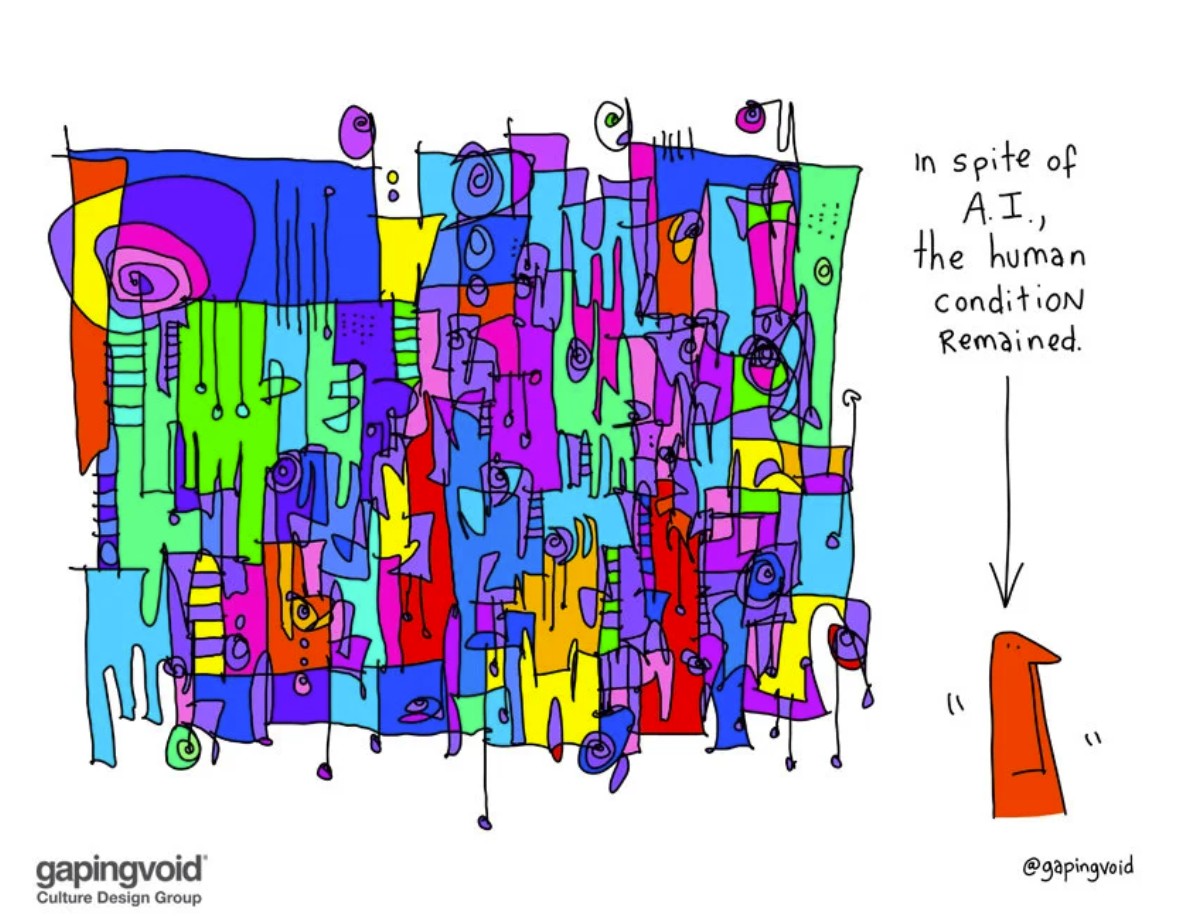
I believe one of the key differentiators is engineering judgement. Today, there are many capabilities that AI performs better than humans, such as faster calculations and large-scale data processing. However, AI cannot take responsibility for decisions. AI cannot judge and decide.

Engineering judgement is the ability to interpret data, understand context, evaluate trade-offs, and make decisions. While in construction context, the judgement need to consider safety, ethics, and long-term consequences as well. At the end, it is humans, not machines (or AI), who are held accountable.

AI can analyse and optimise.
But only humans can judge.

If engineering judgement that differentiates engineers from AI so the next important question that should be raised is:

“how do we develop this judgement?”

From my experience, there are two elements that play a crucial role: formal engineering education, and first-hand project experience

Formal education which through schools or universities provides engineers with foundational theories, frameworks, and problem-solving approaches. This knowledge shapes how engineers think. However, classroom knowledge alone is not enough to develop engineering judgement.

Judgement develops when theory is tested against reality. In construction projects, we usually face tight deadlines, budget constraints, site limitations, and often incomplete information. These exposure to project challenges can gradually strengthen engineering judgement. My interactions with senior engineers and experts clearly demonstrate how deeply their judgement has been shaped by years of experience in the project.

Actually, the importance of understanding fundamental engineering principles became especially clear to me a few years ago while I’m still work a lot with BIM. During a BIM session I delivered at a university, one student asked a question I still remember clearly:

“Is it still important to learn basic structural analysis when we already have BIM?”

My answer was immediate:

“Yes! absolutely.”

In many cases, BIM is merely a tool. Without a solid understanding of engineering fundamentals, it becomes a classic case of garbage in, garbage out. Models and analysis may look impressive but without proper judgement, the outputs can be misleading. Today, In the midst of increasing AI adoption, that question still stay with me, and sometimes I asked myself:

“What should future civil engineering students learn in class? Will they still study fundamental like structural analysis or geotechnical engineering the way we did?”

My answer remains exactly the same as the one I gave years ago:

“Yes, absolutely.”

Because learning engineering fundamentals: understanding frameworks, engineering mechanics, and problem-solving approaches remains essential. AI does not replace engineering thinking. It supports and enhances our ability to analyse and optimise, but it does not decide for us.

Again, engineering judgement stands on two pillars: strong fundamental engineering knowledge and project experience. As AI becomes more embedded in engineering workflows, the real risk is not that engineers will become obsolete, but that they may become over-reliant on AI without sufficient understanding or judgement.

The future does not belong to engineers who merely operate AI. It belongs to engineers who:

  1. Master fundamentals
  2. Understand the project
  3. Exercise engineering judgement through experience

In the end, engineering is not just about computation, calculation, or analysis.
It is about responsibility.

Rethinking BIM Adoption: Why BIM is Not One-Size-Fits-All

For the past decade, I have worked across various roles in an Indonesian contractor. From site and project management to BIM management and digital leadership. During this journey, I have seen BIM praised as a silver bullet and mandated as a requirement. However, one thing that I learned is:

BIM is not a one-size-fits-all. Its value depends on how well it is tailored to each project objectives and requirements.

Without this tailoring, BIM implementation can become layer of complexity which adding processes without necessarily improving outcomes. Only when it is aligned with clear purposes, BIM becomes a strategic enabler not just a deliverable.

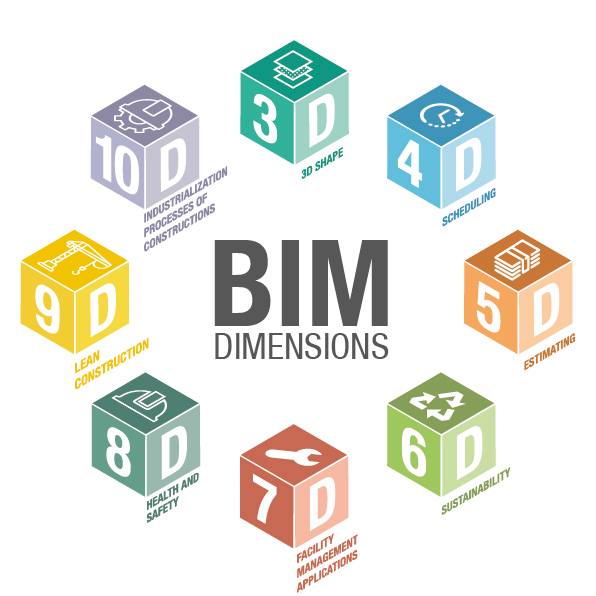
BIM Dimension (parametric-architecture.com)

In theory, full BIM implementation at the highest maturity level on every project sounds ideal. in practice, especially within the Indonesian construction industry, it is neither optimal nor realistic. Because projects vary significantly in scale, complexity, delivery method, client maturity, digital capability and expectation. Applying the same BIM scope to a small building project and a large, complex data center, for example, rarely makes sense. The effort and cost may outweigh the benefits.

Over the years, my own question has shifted from “Can we use BIM?” to “How we can reap the maximum Benefits of BIM?”. BIM delivers its greatest impact when it is treated as an enabler, not merely a contractual deliverable. In successful projects, BIM is aligned with clear, practical objectives, such as:

  • Supporting method statements and construction sequencing
  • Improving coordination between structure, architecture, and MEP
  • Reducing rework through clash detection
  • Improving safety planning and hazard identification

A more effective approach is to right-size BIM implementation, so we need to understand its purposes. For example at tender stage, BIM may focus on construction sequencing, and quantity take offs to support pricing and budgeting. For low complexity project progress monitoring and quantity support may be sufficient. While for high risk project (line data center with complex MEP) needs deeper BIM integration for advance coordination and staging. The key is to be selective, ensuring that the effort invested is proportional to the value created.

Contractors operate under tight margins. Hence, every additional scope of BIM must therefore be justified. A mature BIM strategy should considers

  • Cost of modeling and coordination
  • BIM competency within the project team
  • Time required to develop and update the models
  • Expected reduction in rework, or claims

When BIM is tailored correctly, the benefit-cost ratio becomes positive. On the other hand, when BIM is over engineered, the ratio might flip.

In Indonesia, currently BIM adoption is growing, but maturity levels still vary widely across clients, consultants, and contractors. However the competency gap has narrowed over the past few years. A successful BIM implementation requires understanding of the project and clear purposes of its BIM adoption. The goal is not to do everything digitally but to build smarter digitally and physically. After 10 years working within an Indonesian contractor, my conviction about BIM is simple:

BIM should adapt to the project, not force the project to adapt BIM

When BIM is tailored and aligned with project objectives, delivery strategy, and cost realities, it becomes a powerful enabler. The future of BIM in Indonesia lies not in the highest level implementation, but in smart, purpose-based, and value-driven adoption. Just as every construction project is unique, BIM implementation should be too.