
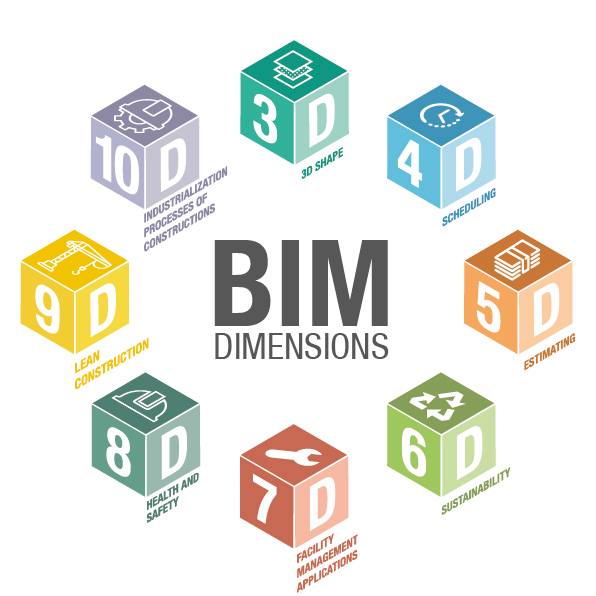
Artificial intelligence (AI) is rapidly transforming the world today, including the construction industry. With AI, we can now analyse data and run complex simulations almost instantly. In construction for example, AI supports and optimises the use of BIM and other digital tools for scheduling, cost estimation, and even hazard identification.
Yet amid all this technological acceleration, a common question emerges:
“will humans compete with AI in the future?“
However, from my perspective as an engineer, the question that we should be asking is:
“In the future, what truly differentiates engineers from AI?“
I believe one of the key differentiators is engineering judgement. Today, there are many capabilities that AI performs better than humans, such as faster calculations and large-scale data processing. However, AI cannot take responsibility for decisions. AI cannot judge and decide.

Engineering judgement is the ability to interpret data, understand context, evaluate trade-offs, and make decisions. While in construction context, the judgement need to consider safety, ethics, and long-term consequences as well. At the end, it is humans, not machines (or AI), who are held accountable.
AI can analyse and optimise.
But only humans can judge.
If engineering judgement that differentiates engineers from AI so the next important question that should be raised is:
“how do we develop this judgement?”
From my experience, there are two elements that play a crucial role: formal engineering education, and first-hand project experience
Formal education which through schools or universities provides engineers with foundational theories, frameworks, and problem-solving approaches. This knowledge shapes how engineers think. However, classroom knowledge alone is not enough to develop engineering judgement.
Judgement develops when theory is tested against reality. In construction projects, we usually face tight deadlines, budget constraints, site limitations, and often incomplete information. These exposure to project challenges can gradually strengthen engineering judgement. My interactions with senior engineers and experts clearly demonstrate how deeply their judgement has been shaped by years of experience in the project.
Actually, the importance of understanding fundamental engineering principles became especially clear to me a few years ago while I’m still work a lot with BIM. During a BIM session I delivered at a university, one student asked a question I still remember clearly:
“Is it still important to learn basic structural analysis when we already have BIM?”
My answer was immediate:
“Yes! absolutely.”
In many cases, BIM is merely a tool. Without a solid understanding of engineering fundamentals, it becomes a classic case of garbage in, garbage out. Models and analysis may look impressive but without proper judgement, the outputs can be misleading. Today, In the midst of increasing AI adoption, that question still stay with me, and sometimes I asked myself:
“What should future civil engineering students learn in class? Will they still study fundamental like structural analysis or geotechnical engineering the way we did?”
My answer remains exactly the same as the one I gave years ago:
“Yes, absolutely.”
Because learning engineering fundamentals: understanding frameworks, engineering mechanics, and problem-solving approaches remains essential. AI does not replace engineering thinking. It supports and enhances our ability to analyse and optimise, but it does not decide for us.
Again, engineering judgement stands on two pillars: strong fundamental engineering knowledge and project experience. As AI becomes more embedded in engineering workflows, the real risk is not that engineers will become obsolete, but that they may become over-reliant on AI without sufficient understanding or judgement.
The future does not belong to engineers who merely operate AI. It belongs to engineers who:
- Master fundamentals
- Understand the project
- Exercise engineering judgement through experience
In the end, engineering is not just about computation, calculation, or analysis.
It is about responsibility.
 A Daydreamer's Journal